
Expert Insights

Latest Trends in Healthcare Engagement

Stay updated with the latest trends in healthcare and technology. This section offers key insights on how professionals are adapting to change and improving patient interactions. Learn about innovative strategies and real-world examples that demonstrate effective communication between healthcare teams, their patients, HCOs and Industry. By understanding these approaches, we can better tackle current challenges and create a more engaged healthcare environment. Join us as we explore what’s shaping the future of healthcare engagement and how Meplis is at the forefront of these developments.

Hospital Workforce Management

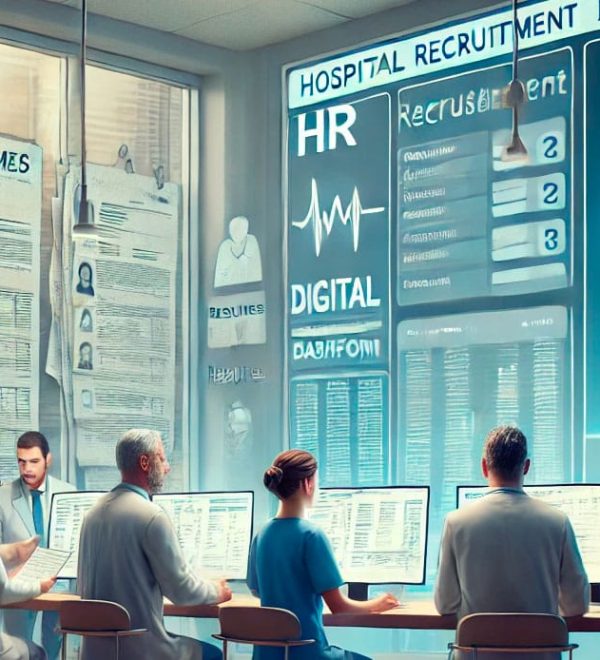
Hospitals Are Losing the Workforce Battle — How Network Intelligence Could Turn It Around

Hospitals everywhere are facing a silent crisis — not a shortage of technology, but a…
Hospital Education

Why Hospital Education Struggles to Reach Beyond the Walls — and How That Could Change

Hospitals have long played a central role in medical education — from grand rounds and…

Hospital Quality Benchmarking

Why Hospitals Struggle to Benchmark Quality — and How a Networked Quality Center Could Help

Hospitals collect more data than ever before — yet few can use it to truly…
Hospital research HCO Research center Meplis solution

The Hidden Inefficiencies Holding Back Hospital Research

Hospital research operations are still too manual: duplicated feasibility, low site visibility, and slow start-up.…
Healthcare organizations (HCOs) have invested heavily in EHRs and patient portals. But when it comes to staff training, communication, and collaboration, too many hospitals still rely on a patchwork of outdated systems: email chains, fragmented chat apps, and rigid portals. For healthcare professionals (HCPs), this often means: Wasting valuable time searching for information across multiple channels Repeating the same updates in different tools Missing critical knowledge because messages are buried in silos It’s no surprise that these inefficiencies create stress for staff — and risks for patients. The Human Cost of Fragmented Workflows McKinsey research shows that 31% of nurses in the US are considering leaving direct patient care within a year, citing workload, lack of flexibility, and poor communication as top reasons (McKinsey, 2023). Recognition from leadership and better support systems are among the most effective ways to improve retention — yet many hospitals lack the tools to deliver this consistently. Another McKinsey study highlights that up to 15% efficiency gains by 2030 could come from better interoperability and reduced manual hand-offs. But achieving those gains requires not just connected systems — it requires tools that clinicians can actually use in their day-to-day workflows (McKinsey, 2024). Hospitals Know Connected Care Matters — But Workflow Is the Barrier According to Deloitte, 84% of healthcare executives see strong clinical value in connected care, and 74% see operational value. Yet adoption often lags because tools don’t integrate into workflows or demonstrate clear value to end users (Deloitte, 2025). This gap explains why so many well-intentioned initiatives underperform: if collaboration and training tools don’t make HCPs’ lives easier, they simply won’t use them. The Next Frontier: Digital and AI Integration BCG notes that the real impact of digital and AI in healthcare comes not from isolated apps, but from solutions that streamline entire workflows, reduce administrative burden, and empower providers with evidence-based insights in real time (BCG, 2025). But BCG also warns: many digital projects fail because they aren’t designed with clinicians in mind, or because hospitals lack clear KPIs to measure improvement. What a Smarter Approach Looks Like To work for HCPs — and therefore for HCOs — staff collaboration and training platforms need to deliver: Secure, compliant communication (HIPAA/GDPR aligned, unlike WhatsApp or LinkedIn) Integrated workflows that connect to existing hospital systems (LDAP, EHR, scheduling) Searchable, structured groups for clinical knowledge and peer support Recognition and feedback loops that make staff feel valued Scalable, cloud-based deployment that keeps costs down while ensuring access This isn’t about replacing EHRs or portals. It’s about giving HCPs the daily collaboration environment they actually need — one that reduces stress, saves time, and ultimately supports better patient outcomes. Why It Matters Now With nearly a third of nurses considering leaving patient care, and billions being invested in digital health tools, hospitals cannot afford for internal collaboration to remain the weak link. When hospitals give their staff a secure, interoperable, and user-friendly space to collaborate, everyone benefits: Staff retention improves because people feel supported and recognized Operational efficiency increases by reducing redundant admin Patient care quality rises as knowledge flows more easily across teams ✅ Your Turn: If you’re working inside a hospital today — what’s the most frustrating part of your internal communication or training systems? We’d love to hear your input as we continue developing solutions designed for HCPs.

Why HCO Collaboration Tools Still Fall Short — and What Could Change

Hospitals modernized patient records, but staff collaboration still relies on fragmented tools. McKinsey reports 31%…

HCP Career Path Solutions

Why Career Building Feels So Unstructured for HCPs – And How That Could Change

Choosing a medical career is just the beginning—but what comes next isn’t always clear. From…
Paid Industry collaboration opportunities for HCPs

Are You Missing Out on Paid Industry Collaborations?

Many healthcare professionals never hear about legitimate, paid opportunities to collaborate with pharma and medtech…
HCP industry engagement collaboration

Why HCP–Industry Engagement Still Feels So Fragmented—and What We’re Doing to Fix It

Collaboration between HCPs and industry is essential—but most systems make it harder than it should…

HCPs collaborating in real-time on a patient-case

Why Real-Time Case Collaboration Deserves a Place in Every HCP’s Toolkit

Real-time case collaboration is becoming essential for clinical decision-making. This post explores how structured, secure…
HCP physician collaboraation

Why Online Medical Communities for Specialty-Based Collaboration Need a Smarter, Safer Platform

Medical specialty groups are scattered across tools like WhatsApp and LinkedIn—but these platforms fall short…
HCP-overloaded

Why Staying Up-to-Date Feels Harder Than Ever for HCPs

Healthcare professionals are drowning in content—yet still struggle to stay current. From email fatigue to…
Real-World Evidence in Pharma & Medtech

Real-World Evidence in Pharma & Medtech: Why the System is Still Underperforming

Despite billions invested, real-world evidence (RWE) still struggles to deliver lifecycle impact in Pharma and…
Post-Market Surveillance Challenges in Pharma & Medtech

Post-Market Surveillance Challenges in Pharma & Medtech

Post-market surveillance in pharma and medtech is overdue for transformation. Fragmented systems, manual workflows, and…
Targeted Promotional Marketing for HCPs

Fixing Inefficiencies in Targeted Promotional Marketing for HCPs

Pharma and Medtech pour billions into targeted marketing, but HCP engagement keeps dropping. What’s going…